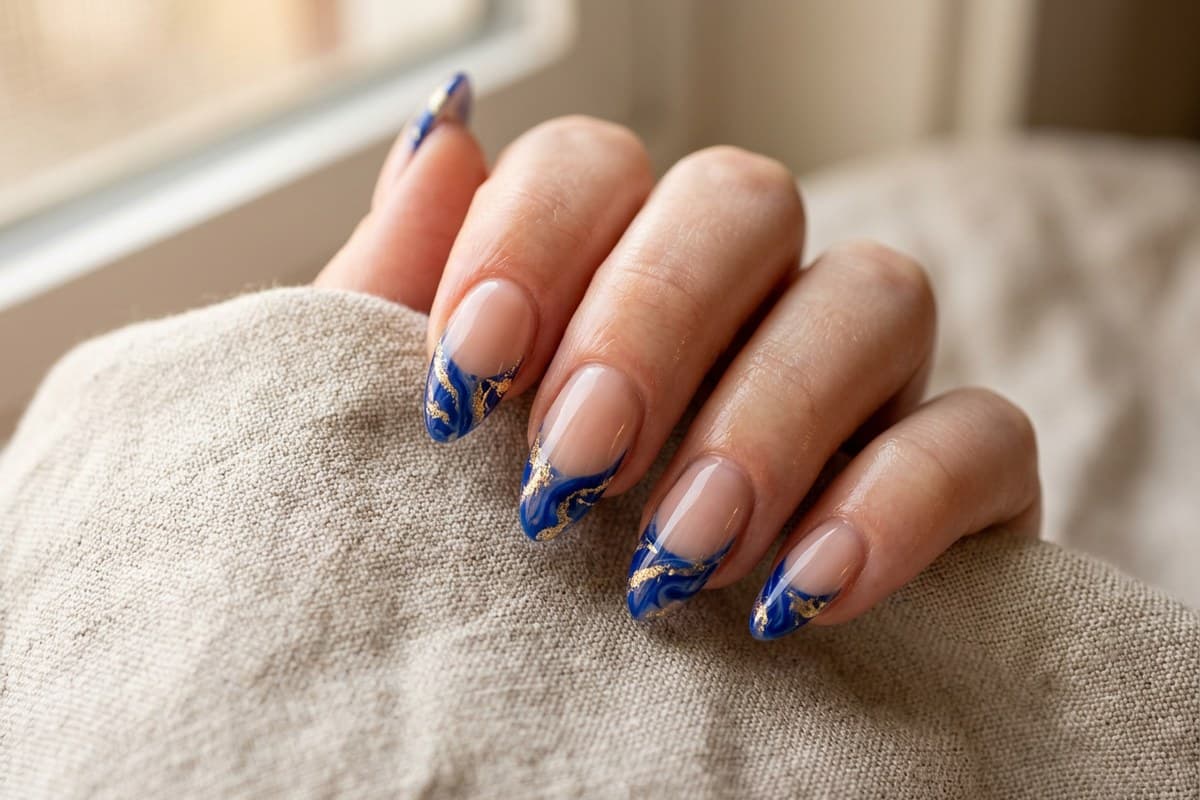
Marble nails are the manicure that never ages out. Instead of chasing one seasonal color, you are wearing the look of real stone: swirled veins, cloudy depth, and that slightly translucent glow you get from agate, quartz, and Calacatta marble. That is exactly why this look ranks year-round and shows up on brides, editors, and TikTok DIYers in equal measure. It reads expensive without being loud, and it flatters every skin tone because you control the palette.
Marble Nails: 30+ Water, Milky & Gold Vein Designs (Image: Nail Art AI)
Marble nails are the manicure that never ages out. Instead of chasing one seasonal color, you are wearing the look of real stone: swirled veins, cloudy depth, and that slightly translucent glow you get from agate, quartz, and Calacatta marble. That is exactly why this look ranks year-round and shows up on brides, editors, and TikTok DIYers in equal measure. It reads expensive without being loud, and it flatters every skin tone because you control the palette.
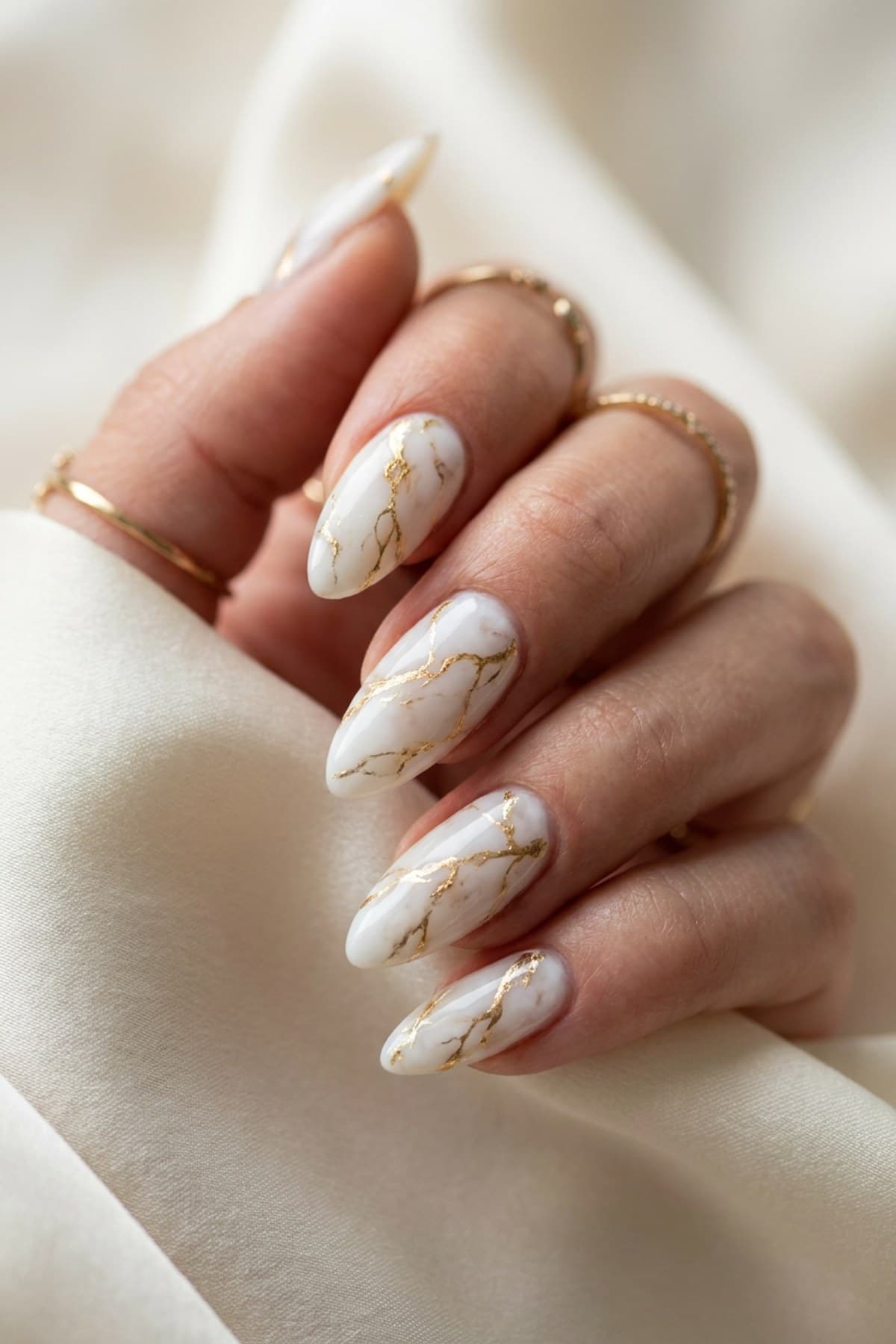
There are really three headliners under the marble umbrella, and this guide covers all of them properly. Water marble is the classic dip-in-a-cup swirl, high-drama and endlessly customizable. Milky marble is the quiet-luxury version, where the faintest self-toned veins ghost through a sheer white base. And gold vein marble is the flex, thin rivers of gold foil cracking across the nail like veined stone in a luxury bathroom. Master the difference and you can do dreamy, minimal, or full-glam on demand.
Below you get 30+ named designs sorted into five buckets, the four core techniques explained without the fluff, a step-by-step water marbling walkthrough, and the exact way pros get milky and gold-vein finishes to look salon-clean. Before you commit to a palette or book an appointment, head to our virtual try-on and see marble on your own hand in seconds, no polish remover required.
The Four Ways to Marble a Nail (and Which One to Pick)
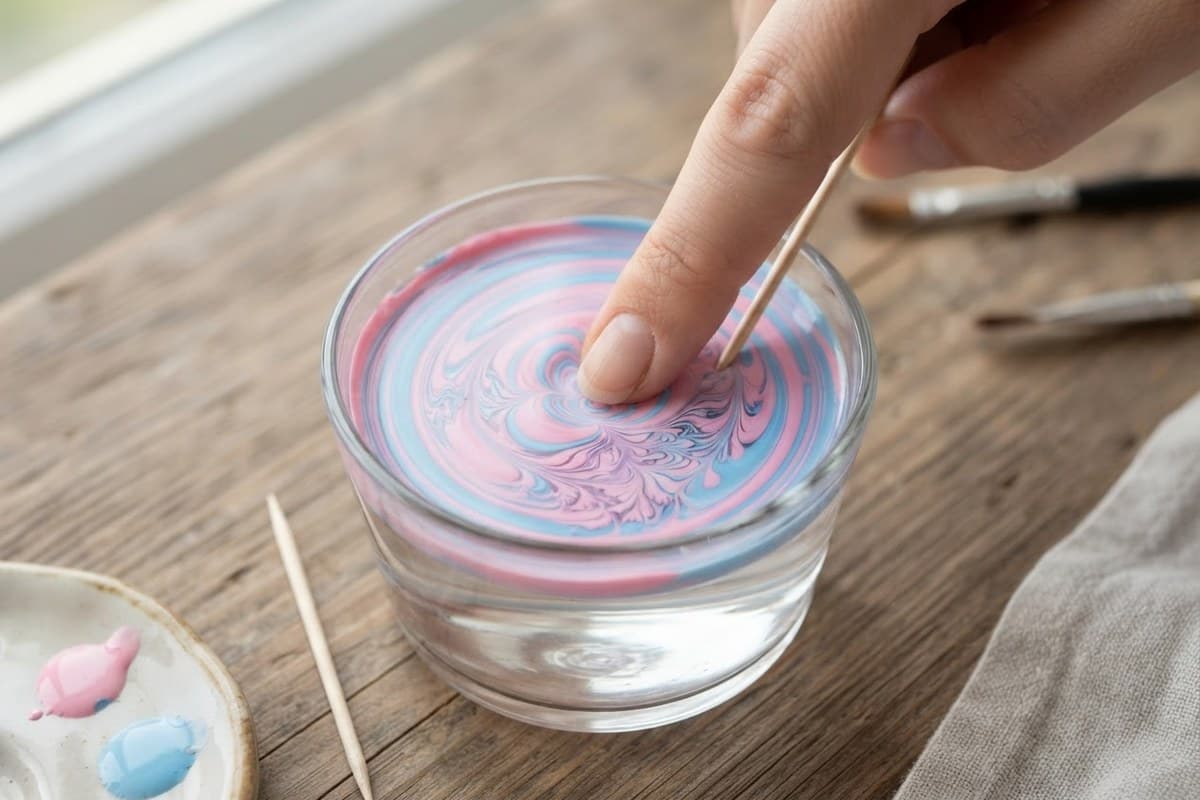
People say marble like it is one technique, but there are four, and knowing the difference saves you a lot of frustration. Water marble is the original: you drop polish into a cup of water, drag it into a pattern, and dip your nail through the film. It gives you the boldest, most stone-like swirls and the widest color range, but it is fiddly and wastes polish. Dry brush marble skips the water entirely, you paint two or three colors side by side on the nail (or a palette), then feather them together with a fine brush or toothpick. It is faster, cleaner, and far more beginner-friendly.
The other two are about finish rather than method. Milky marble uses a sheer, translucent white base with barely-there veins dragged through while it is still wet, so the effect is soft and glowy instead of graphic. Gold vein marble adds thin lines of gold foil or metallic gel over a set base to mimic natural stone veining. You can layer these: a milky base with a whisper of gold vein is one of the most requested bridal looks right now.
If you are DIY-ing for the first time, start with dry brush on a neutral base, it is genuinely hard to mess up. If you want drama, learn water marble. And if you just want to see how a given palette reads on your fingers before you buy five polishes, skip ahead and browse marble looks in our gallery or test-drive them with the AI try-on.
The Four Ways to Marble a Nail (and Which One to Pick) (Image: Nail Art AI)
30+ Nail Art Techniques Designs to Save
Grouped by vibe so you can jump to yours. Screenshot the ones you love — or try them on your own hand first.
Water Marble Classics
Water Marble Classics (Image: Nail Art AI)
Cotton Candy Swirl — Pastel pink and baby blue dropped in rings and dragged into a dreamy candy-floss twist across every nail.
Bullseye Ripple — Concentric drops of white and navy pulled from the center outward so each nail looks like a pebble tossed in a still pond.
Ink Storm — Jet black and smoke-white feathered together for a moody thunderhead marble that reads instantly high-fashion.
Sunset Drift — Coral, tangerine, and gold swirled loose like the sky at dusk, warm and glowy on almond tips.
Neon Static — High-voltage pink, electric blue, and lime dragged into jagged veins for a festival-ready water marble.
Oceanic Wave — Royal and aqua blue looped into cresting waves under a glass-gloss top coat that genuinely looks wet.
Milky Marble & Soft Neutrals
Milky Marble & Soft Neutrals (Image: Nail Art AI)
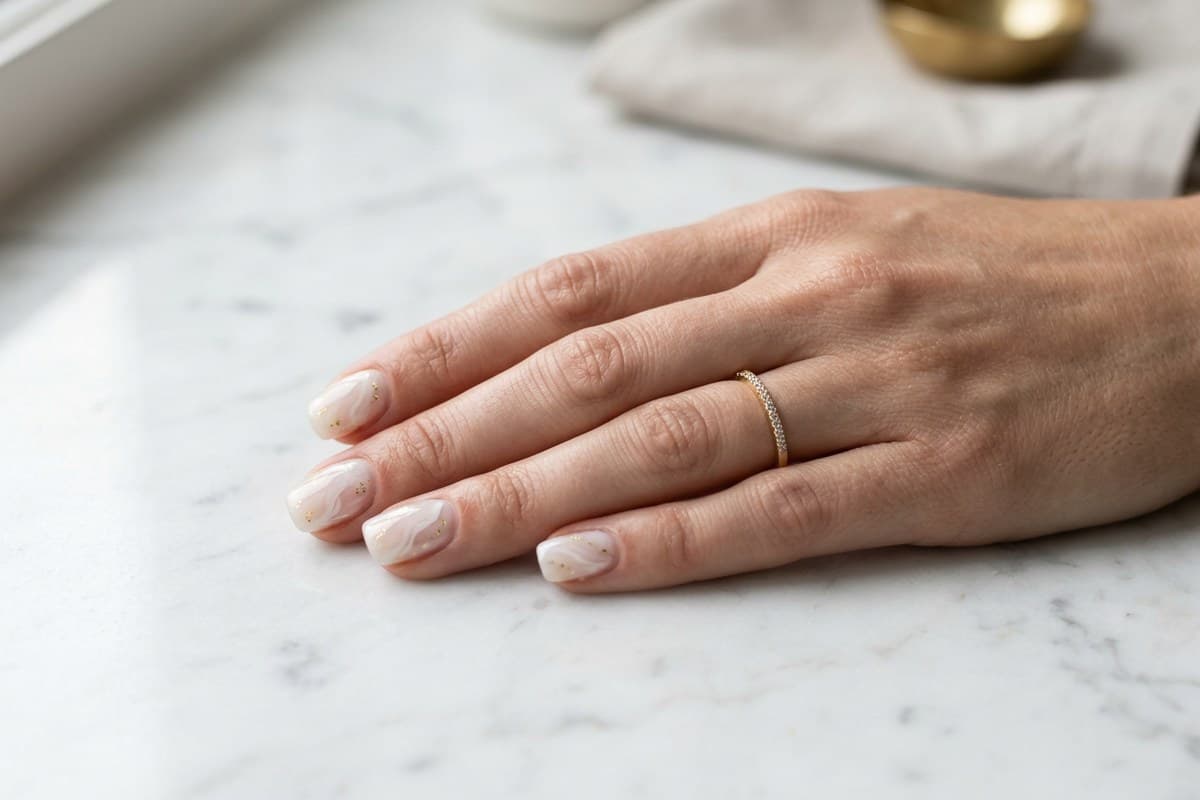
Milk Glass Whisper — A sheer milky-white base with the faintest self-toned swirl, so subtle it looks like frosted sea glass.
Latte Swirl — Warm oat and caramel dragged through a creamy nude for a cozy coffee-with-milk marble that goes with everything.
Blush Vellum — Pale pink veins ghosting through an ivory base, the quiet-luxury manicure brides and minimalists keep saving.
Greige Fog — Soft grey and beige melting into each other like morning mist settling over a bare nail.
Vanilla Cloud — Barely-there off-white swirls that puff across the nail like whipped cream, all softness and zero harsh contrast.
Peach Moonstone — Muted peach and cream blended to mimic the milky inner glow of a polished moonstone cabochon.
Gold Vein & Metallic Marble
Gold Vein & Metallic Marble (Image: Nail Art AI)
Molten Gold Vein — Thin rivers of gold foil cracking through a white base like veined Calacatta marble in a luxury bathroom.
24K Fracture — Bold, jagged gold leaf laid over inky black for a dramatic broken-stone look that catches every light.
Champagne Drizzle — Soft ivory marble laced with fine champagne-gold threads, wedding-ready and quietly glinty.
Emerald & Gold Inlay — Deep green swirls edged in gold foil so each nail looks like a precious stone set in jewelry.
Rose Gold Wisp — Blush marble threaded with delicate rose-gold veins for a warm metallic finish that flatters everyone.
Chrome-Kissed Marble — A mirror-chrome accent nail floating beside soft grey marble for maximum high-shine contrast.
Gemstone-Inspired Marble
Rose Quartz Glow — Milky pink with faint cloudy swirls that copy the love-stone's soft, semi-translucent depth.
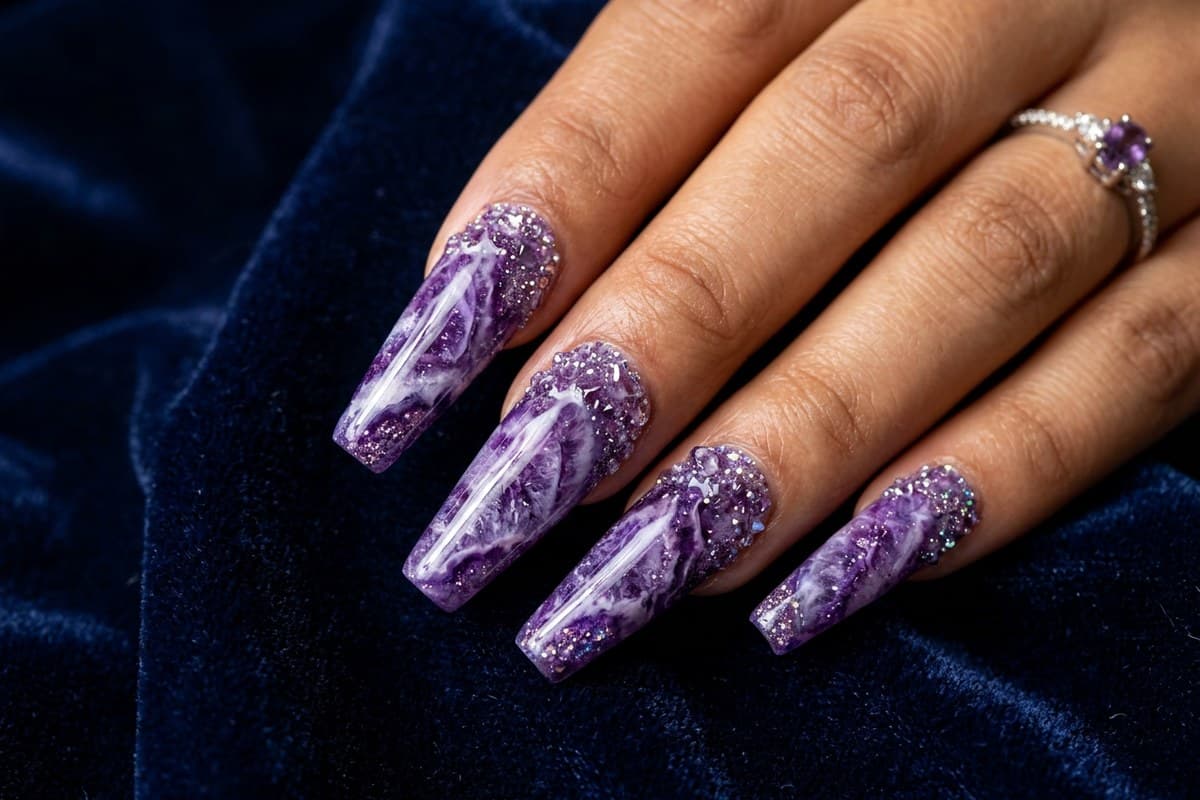
Amethyst Geode — Purple, lilac, and white pulled into crystal facets with a sparkle of glitter tucked at the cuticle.
Lapis Lazuli — Deep cobalt scattered with tiny gold flecks, the richest and most regal blue marble you can wear.
Malachite Bands — Banded emerald and forest green looped into the hypnotic concentric rings of real malachite stone.
Smoky Quartz — Brown and grey feathered into a mysterious, smoldering stone effect that suits cool weather perfectly.
Black Opal Flash — Inky black shot through with electric blue and gold veining, like fire flickering inside an opal.
Marble French & Accent Styles
Marble French Tip — A nude nail finished with a swirled marble tip instead of the usual white line, subtle and very modern.
Negative-Space Ribbon — A single marble ribbon curling across a bare, glossy nail for that editorial, less-is-more finish.
One Marble Accent — Nine glossy solid nails with a single stone-marble feature finger to keep the whole set wearable.
Autumn Agate — Burnt orange, cocoa, and gold banded like sliced agate, tailor-made for sweater season.
Marble Ombre Fade — Solid color at the cuticle melting into busy marble at the tips for a gradient twist on the trend.
Jelly Marble Overlay — A sheer jelly-pink base with a white marble veil floating on top, glossy and squishy-looking.
Water Marbling Without the Meltdown
Water marble fails for predictable reasons, and every one is fixable. First, water temperature: use room-temperature or slightly warm water, never cold. Cold water makes polish seize and skin over before you can drag it, so the pattern never spreads into clean rings. Filtered or bottled water helps too, since minerals in tap water can stop the polish from blooming. Second, protect your skin. Paint liquid latex, a swipe of Vaseline, or cuticle oil around each nail before you dip, so the inevitable overflow peels away instead of staining.
Technique-wise, work fast and work fresh. Drop one color into the center, let it spread, drop the next color right into the middle of the first, and keep alternating to build a bullseye. Then drag a toothpick from the outside in, only a few passes, to create veins, because over-swirling turns everything to mud. Older, gloopy polishes will not spread, so reach for thinner, well-shaken bottles and pop a fresh cup of water for every one or two nails.
Angle your nail into the design at a low angle, submerge it fully, use a stick to scoop the leftover film off the surface while your finger is still under water, then lift straight up. Clean the edges with a small brush dipped in acetone, and seal with a glossy top coat, which is what makes water marble look like polished stone instead of a craft project. For inspiration on which color pairs actually read as marble, deep blues and whites are the most forgiving, and you can see more blue combinations here.
Milky Marble and Gold Vein: The Quiet-Luxury Duo
Milky marble is having a long moment because it is the rare nail art that looks expensive and understated at once. The secret is a sheer, buildable white or nude base rather than an opaque one, one or two thin coats so light still passes through. While that layer is wet (or between gel coats, uncured), drag a fine brush loaded with a slightly whiter or slightly deeper tone in loose, curved strokes. You want suggestion, not stripes. Blur any hard lines with a clean, barely-damp brush so the veins dissolve into the base. Done right, it looks like frosted quartz, and it pairs beautifully with a soft white palette.
Gold vein is where you turn quiet into luxe. There are two clean ways to do it: transfer foil, which you press onto a tacky adhesive gel and lift to leave torn metallic streaks, or metallic gel painted with a striper brush for thinner, more controlled lines. Keep the veins asymmetrical and let them branch, real stone never runs in parallel. Less is genuinely more here; two or three veins per nail out-classes a full web of gold every time.
Combine the two and you have the bridal and event-season powerhouse: a milky base, a whisper of self-toned marble, and a few branching gold lines finished under a high-gloss top coat. If you love the metallic side of this look, the same foil and chrome skills carry straight over to our chrome nails guide, which pairs shockingly well with a soft marble accent finger.
Choosing Your Marble: Colors, Shapes, and Seasons
Marble is a chameleon, so let the palette do the seasonal work. Cool tones (grey, navy, icy white, silver vein) feel like winter stone and holiday elegance. Warm agate tones (rust, cocoa, amber, gold) are made for fall, which is why banded agate and smoky quartz explode every autumn, and you can find that whole warm world in our autumn nail collection. Spring and summer lean pastel and jelly, think rose quartz, cotton candy swirl, and translucent aqua that catches the light.
Shape changes the read completely. Longer coffin and almond nails give veins room to travel, so gemstone and full-coverage water marble look most dramatic there. Short squoval and round nails suit milky marble and single-accent designs, where too much pattern would feel cramped. If you want the most flattering, low-commitment entry point, the marble French tip is unbeatable, it keeps most of the nail clean and puts the swirl only where the eye lands. That structure builds directly on classic French manicure technique, just with a marbled tip instead of a solid line.
One planning tip: pick a maximum of three colors plus one metallic. Marble goes muddy fast when you add a fourth pigment, and the looks that photograph as luxury almost always run tonal, two shades of one family plus gold or white. When in doubt, keep the base soft and let a single bold vein carry the whole nail.
Preview It On Your Hand, Then Save & Shop the Look
A shade that looks perfect on someone else can read totally different on you. Upload a photo of your hand to the AI try-on, apply any of these looks, and see it on your real nails before you book or buy — then browse the design gallery for hundreds more.
Free account required, with your results saved privately.
On natural nails with regular polish, a marble mani sealed with a good top coat holds up about 5 to 7 days. Done in gel and cured, marble nails easily last 2 to 3 weeks, and gold-foil veins actually survive longer under gel because the top coat locks the foil down instead of letting it flake.
Do you have to use water to make marble nails?
No. Water marble is only one method. Dry brush marble skips the cup entirely: you paint two or three colors next to each other and feather them together with a fine brush or toothpick. It is cleaner, faster, wastes far less polish, and is the easiest version for beginners to nail on the first try.
What polish works best for water marbling?
Thinner, freshly shaken creme polishes spread best on water. Very old, thick, or fast-drying formulas seize up before you can drag them into a pattern. Use room-temperature or slightly warm filtered water, never cold, and open a fresh cup every couple of nails so the film stays workable.
How do you get the gold vein marble look?
Two clean ways: press gold transfer foil onto a tacky adhesive gel and lift to leave torn metallic streaks, or paint fine lines with metallic gel and a striper brush. Keep veins asymmetrical and branching like real stone, use only two or three per nail, and seal under a high-gloss top coat.
Are marble nails hard to do at home?
Milky and dry brush marble are genuinely beginner-friendly and forgiving. Water marble takes practice because timing and polish thickness matter a lot. Start with a neutral base and a single accent nail, protect your skin with liquid latex or cuticle oil, and you will get a wearable result quickly.
What nail shape looks best for marble nails?
Longer almond and coffin shapes give veins room to travel, so gemstone and full water marble look most dramatic there. Short squoval and round nails suit milky marble and single-accent looks. The marble French tip flatters every length because it keeps most of the nail clean.