How to Remove Gel Nails at Home Safely (No Damage)
If your gel manicure has grown out and you've got that little gap at the base, please don't start picking. Peeling gel off pulls up thin layers of your real nail and leaves them sore and bendy. The good news is you can take gel off at home safely, and it is easier than it looks.
How to Remove Gel Nails at Home Safely (No Damage) (Image: Nail Art AI)
If your gel manicure has grown out and you've got that little gap at the base, please don't start picking. Peeling gel off pulls up thin layers of your real nail and leaves them sore and bendy. The good news is you can take gel off at home safely, and it is easier than it looks.
All you really need is pure acetone, some cotton, something to wrap with, and a little patience. The gel softens, you gently nudge it off, and your natural nails stay strong. I will walk you through every step, plus gentler no-acetone options and how to help your nails bounce back afterward.
And before you soak anything off, have a little fun deciding what comes next. Browse the design gallery for your next look, then preview it on your own hand with our AI try-on so your fresh nails have somewhere exciting to go.
The Safe Soak-Off Method, Step by Step
The soak-off method is the same thing your salon does, just slower and gentler at home. Acetone breaks down the gel so it lifts off on its own, with no scraping needed. Start by gathering pure acetone, cotton pads, plastic wrap or foil squares, a nail file, a wooden cuticle stick, and cuticle oil.
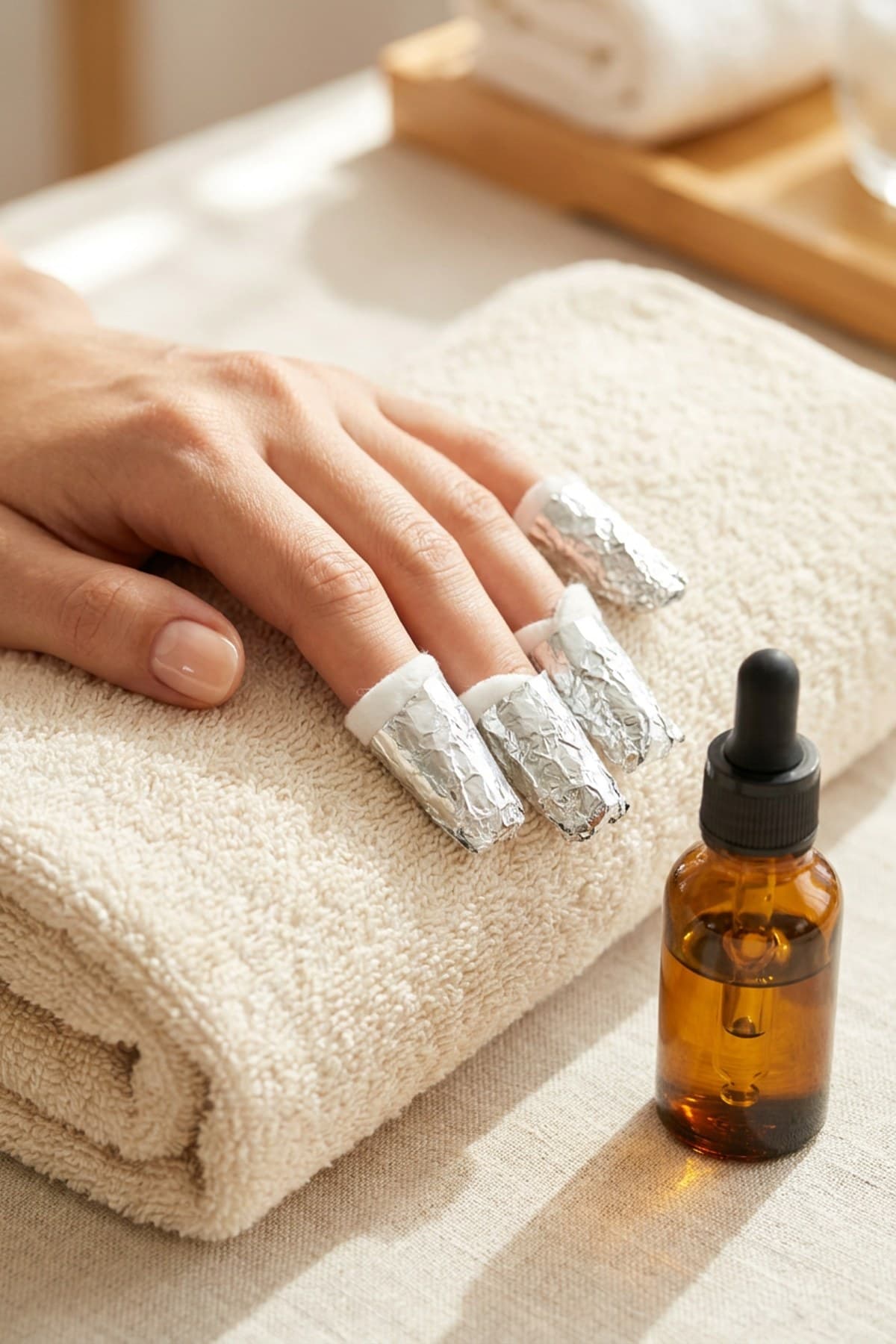
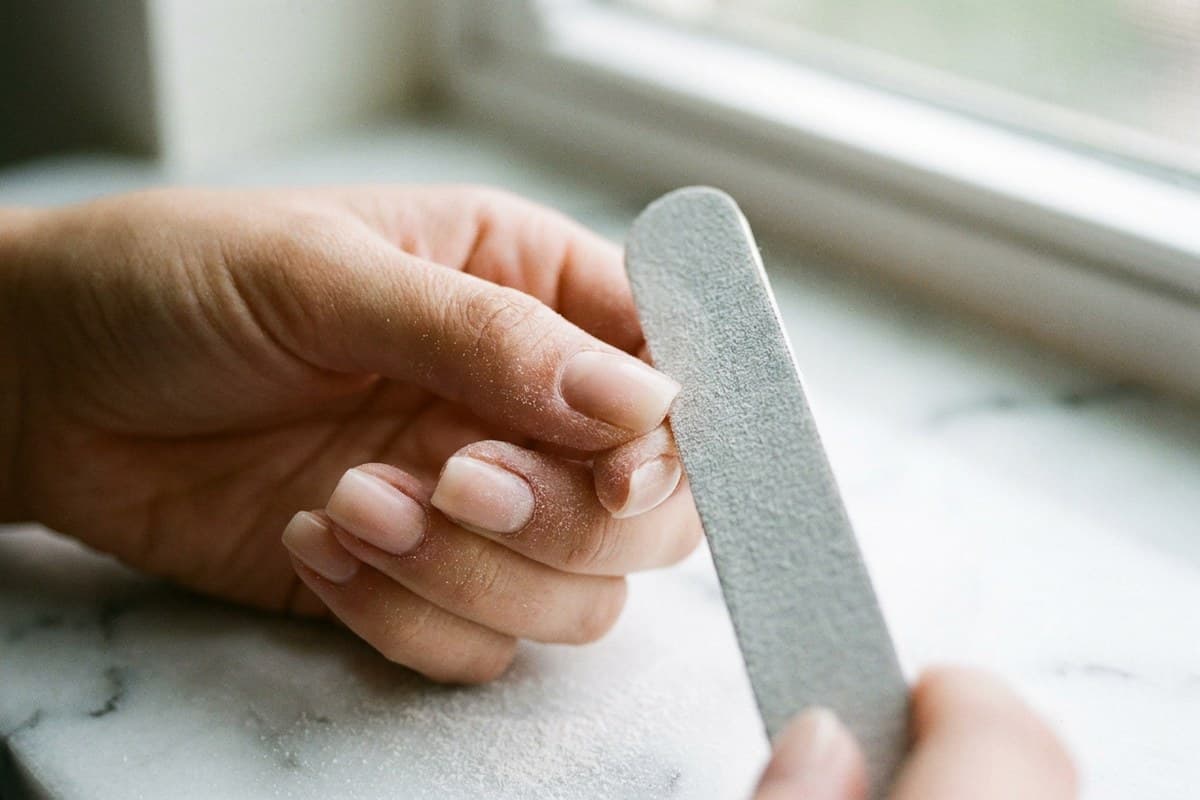
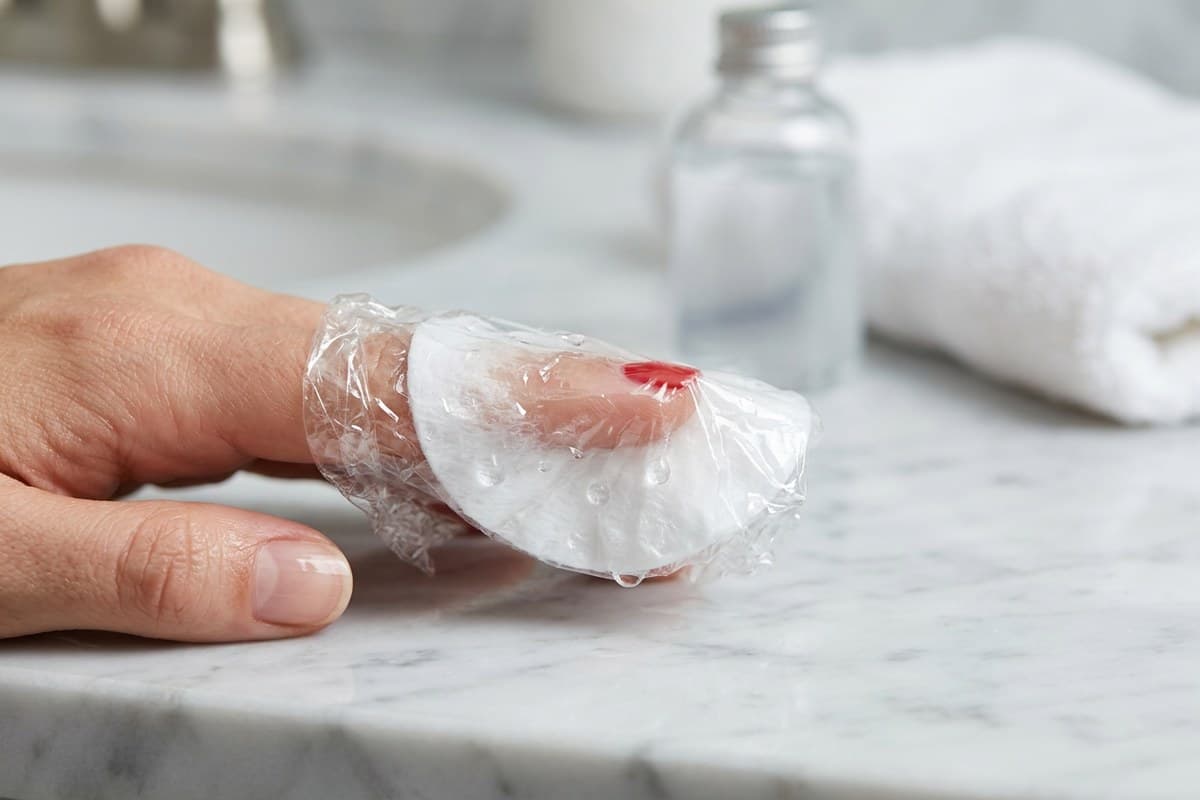
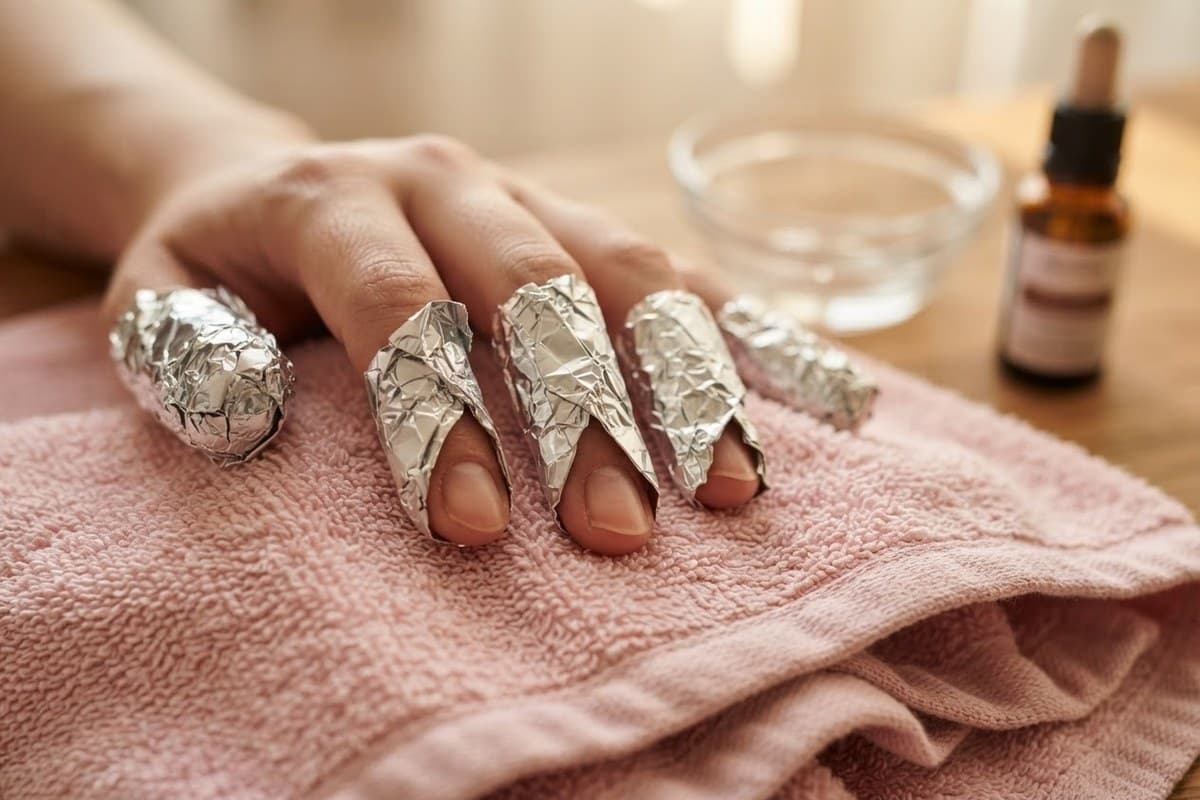
First, lightly file the shiny top coat off each nail so the acetone can soak in. Just buff away the gloss, do not dig into your natural nail. Rub a little petroleum jelly or oil around your cuticles to protect the skin, then soak a cotton pad in acetone, press it onto the nail, and wrap it tightly in plastic wrap or foil. Wait 15 to 20 minutes, then gently twist off each wrap one at a time.
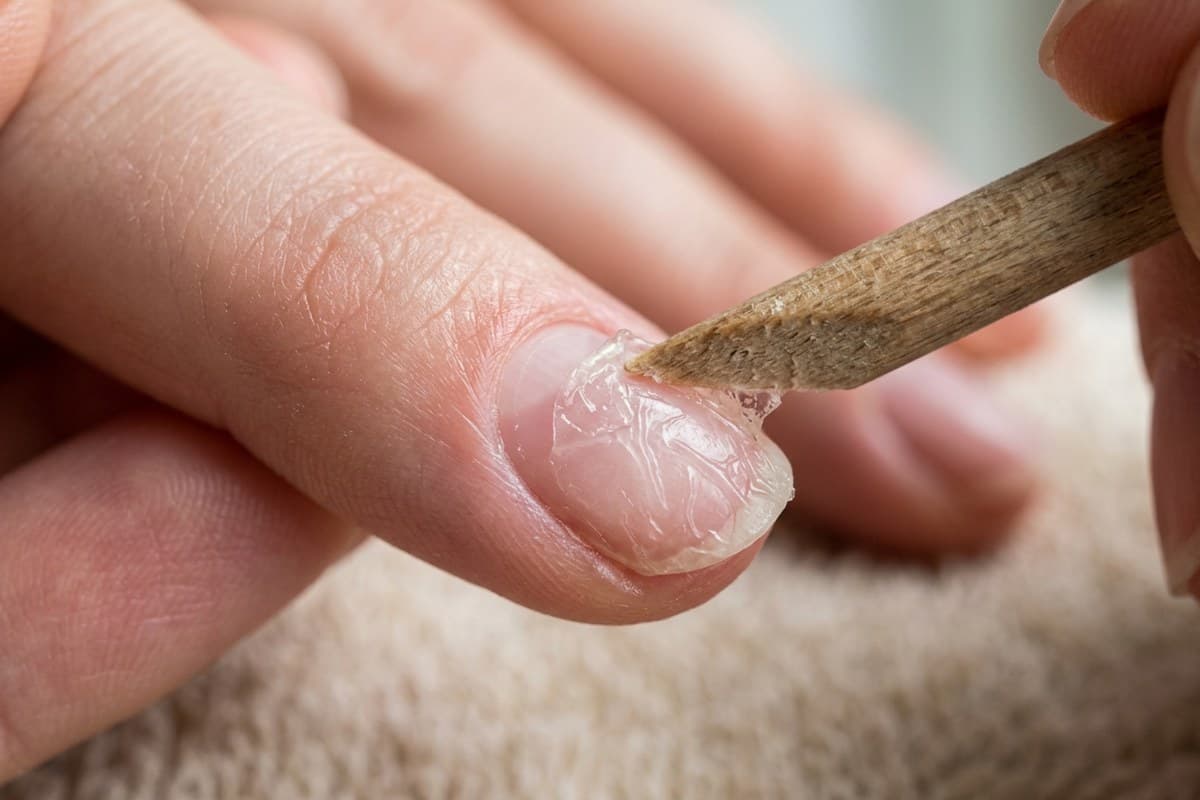
The gel should look wrinkled and lift easily now. Use the cuticle stick to push it off from base to tip, and never force it. If it fights you, rewrap and soak five more minutes. Once you are bare, it is the perfect moment to plan a fresh look, so save a few ideas from the design gallery or try them on your own hand first.
The Safe Soak-Off Method, Step by Step (Image: Nail Art AI)
30+ Nail Care Designs to Save
Grouped by vibe so you can jump to yours. Screenshot the ones you love — or try them on your own hand first.
Post-Removal Recovery Manicures
Post-Removal Recovery Manicures (Image: Nail Art AI)
Sheer Ballet Slipper — A barely-there pink wash that lets tired nails breathe while still looking put-together.
Clear Gloss Reset — One coat of glassy top coat over bare nails for a clean, healthy shine.
Milk Bath Nails — A soft, cloudy white that quietly hides any staining left behind by old gel.
Buffed and Bare Shine — No polish at all, just smoothed, oiled nails glowing on their own.
Whisper French — The faintest pale tip on a nude base, gentle enough for fragile recovering nails.
Rosy Cuticle Glow — A warm rose tint that makes tired hands look instantly healthier.
Nurturing Nude and Milky Shades
Nurturing Nude and Milky Shades (Image: Nail Art AI)
Warm Oat Latte — A cozy beige-cream that flatters every skin tone and softly forgives ridges.
Soft Almond Milk — A pale milky nude that looks fresh without drawing attention to thin spots.
Peachy Skin Tint — A your-nails-but-better peach that evens out any patchy color.
Cool Greige Calm — A quiet gray-beige for when you want polished, not showy.
Blushing Petal — A light dusty pink that reads clean and beautifully cared-for.
Honey Nude Sheen — A golden nude with a soft glow that hides yellow staining.
Low-Commitment Color Without Gel
Low-Commitment Color Without Gel (Image: Nail Art AI)
Easy Cherry Red — A classic regular-polish red that wipes off in seconds when you want a change.
Sky Day Blue — A cheerful soft blue that air-dries fast, no lamp needed.
Fresh Mint Wash — A cooling pastel green that feels light and easy on healing nails.
Lavender Breeze — A gentle purple that looks pretty and lifts off with plain remover.
Buttery Daisy — A soft yellow that brightens your hands without any soak-off drama.
Sunset Coral — A warm orange-pink that is playful now and easy to remove later.
Short and Strong Styles
Short and Strong Styles (Image: Nail Art AI)
Rounded Baby Tips — A soft round shape that is kind to weak edges and looks tidy.
Squoval Everyday — A squared-oval shape that flatters short nails while they toughen back up.
Glossy and Neat — A shiny nude on short nails that makes them look completely intentional.
Micro French — A tiny thin white line on short nails for a fresh, minimal finish.
Single Accent Sparkle — One soft glitter nail on an otherwise bare hand for a little joy.
Clean Cuticle Minimal — Short nails with tidy cuticles and clear coat, simple and strong.
Damage-Hiding Details
Matte Camouflage — A soft matte top coat that blurs ridges and any uneven texture.
Pearl Veil Shimmer — A low-key pearly shimmer that gently distracts from surface dents.
Cream Color Block — A solid opaque cream that fully covers staining in one easy look.
Tiny Heart Accent — A small hand-painted heart to draw the eye away from a weaker nail.
Soft Ombre Fade — A gentle color fade that hides where new growth meets the old line.
Ridge-Filler Smooth — A smoothing base look that levels bumpy nails for a flawless finish.
How to Remove Gel Without Damaging Your Nails
The number one rule is simple: never peel or pick. When you rip gel off, it takes tiny layers of your nail plate with it, and that is exactly what leaves nails thin, bendy, and dotted with white spots. Patience really is the whole secret here.
Use 100 percent acetone, not regular polish remover, because regular remover barely touches gel and you will be there forever. Warmth speeds things along, so wrap your hands in a towel while they soak. And cut your cotton to nail size so the acetone stays on the gel and not all over your skin, which dries it out.
If the gel still is not budging, resist the urge to file it down hard. Soak a little longer instead. When you are done, this is a lovely time to give nails a break with soft, breathable color, since a sheer pink or nude shade hides staining while nails recover, and you will find gentle ideas in the gallery.
No-Acetone and Gentler Options
Not a fan of acetone, or simply out of it? You have choices. The slowest but kindest option is growing the gel out and trimming weekly, though it does take real patience.
You can also carefully file the gel down with a medium-grit file and then a buffer, stopping before you reach natural nail. This works best for thick hard gel and gel extensions that acetone struggles with. A peel-off base coat, used at your next application, makes future removal a breeze too.
For extensions or hard gel that just will not soak off, a warm acetone bowl soak works faster. Dip your nails in a small bowl of acetone set inside a bigger bowl of warm water. When you are ready to repaint, a clean French manicure or a fresh red always looks flattering on newly recovered nails.
Aftercare: Helping Your Nails Bounce Back
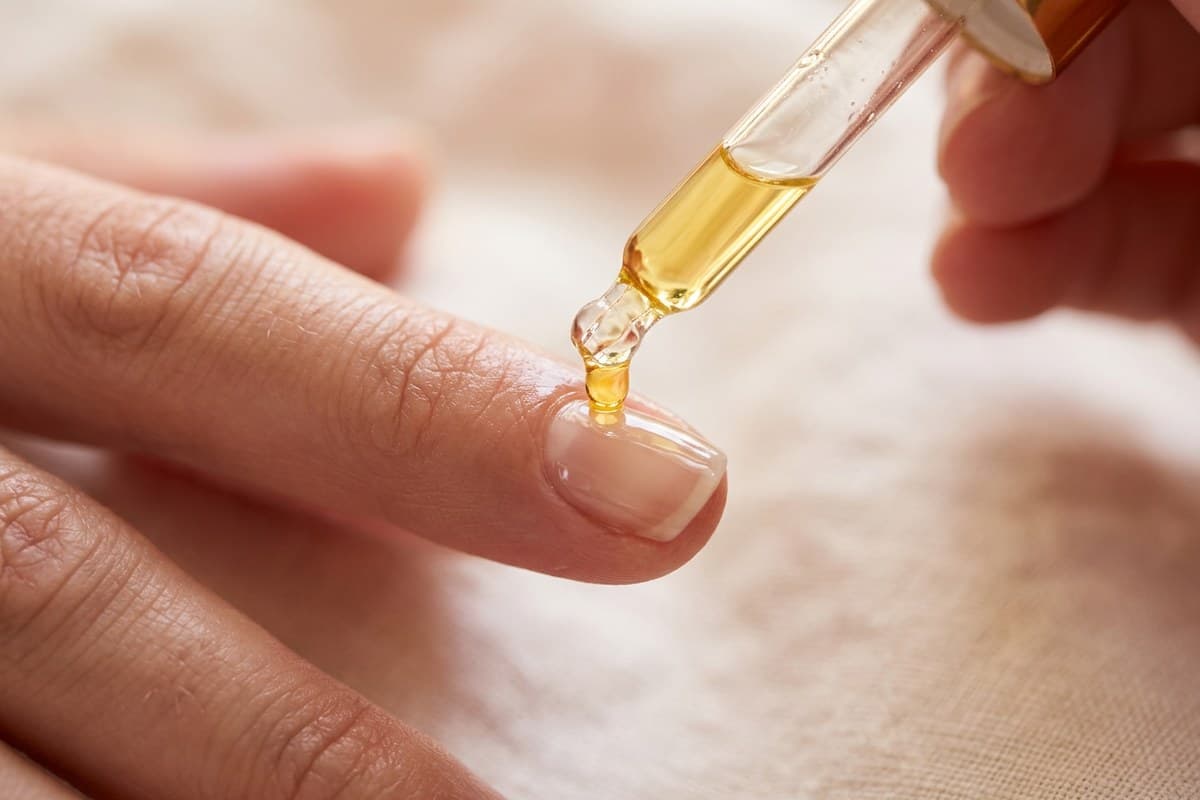
Acetone is drying, so the minute you finish, wash your hands and flood your nails and cuticles with oil. Do this every day for at least a week, because it is the fastest way to undo that dryness and get your shine back.
Give your nails a little breather before your next gel set if you can. A few days to a couple of weeks in regular polish, or totally bare, lets them rehydrate and toughen up. A nail strengthener helps a lot if they feel thin or bendy.
When they are feeling strong again, celebrate with something fun. Browse seasonal ideas in the nail art hub or preview your next set on your own hand, so you walk into your next manicure knowing exactly what you want.
Preview It On Your Hand, Then Save & Shop the Look
A shade that looks perfect on someone else can read totally different on you. Upload a photo of your hand to the AI try-on, apply any of these looks, and see it on your real nails before you book or buy — then browse the design gallery for hundreds more.
Free account required, with your results saved privately.
Can I remove gel nails at home without ruining them?
Yes, absolutely. As long as you soak the gel off with acetone and never pick or peel, your natural nails will stay healthy. The whole trick is patience and gentle nudging, not force.
How long do you soak gel nails in acetone?
Usually 15 to 20 minutes. Lightly buff off the shiny top layer first so the acetone can sink in, then check one nail. If the gel is not lifting yet, rewrap and give it another 5 minutes.
Do I need pure acetone or is regular remover okay?
You need 100 percent pure acetone. Regular polish remover barely touches gel, so you would be soaking forever. Pure acetone is inexpensive and breaks the gel down quickly.
Foil or plastic wrap, which works better?
Both work, but many dermatologists prefer plastic food wrap because it creates a tighter seal, so the acetone is less likely to drip onto your skin. Foil is fine too and can feel easier to fold around each fingertip.
Can I just peel the gel off if it is already lifting?
Please do not. Peeling feels satisfying, but it rips off thin layers of your real nail and leaves it weak, rough, and white-spotted. Always soak instead, even when it looks ready to pop off.
How do I remove gel without acetone?
You can carefully file the gel down with a medium-grit file and buffer, stopping before you reach natural nail. Or simply grow it out and trim weekly. A peel-off base coat at your next application also makes future removal easy.
How do I remove hard gel or gel extensions at home?
Hard gel and extensions often resist acetone, so gently filing most of the bulk down first helps. A warm acetone bowl soak, dipping nails in acetone set inside a bowl of warm water, speeds up the rest.
My nails feel thin after removal, is that normal?
A little softness right after soaking is normal because acetone is drying. Flood your nails and cuticles with oil daily for a week, use a strengthener, and take a short break before your next gel set to let them firm up.
Does removing gel at home hurt?
It should not hurt at all. If scraping or pushing ever feels painful, stop right away and soak longer. Pain means the gel is not soft enough yet, and forcing it is what causes damage.
How often should I take a break from gel?
Giving your nails a few days to a couple of weeks between sets is a kind habit. That little rest lets them rehydrate and rebuild strength, so your next gel manicure looks even better.